Why Your Inner Creative Retreats: The Cost of Transactional Creativity
I recently witnessed an interaction at an animal sanctuary that perfectly illustrates why so many of us get locked out of our inner world. A man was thrusting a handful of grass directly into a cow's face, demanding it eat. The cow stomped its hoof, shook its head, and audibly resisted. The man was genuinely annoyed, muttering about why the animal wouldn't just cooperate.
I see this exact same approach come up so often in my work with people trying to access their inner worlds. We ignore our creative expression for weeks, finally sit down with a blank canvas or a journal, and essentially shout: "I gave you an hour, now do what I want."
We shove the page forward and expect instant inspiration. When our system rebels—with intense anxiety, a blank mind, or a harsh internal critique—we experience frustration. We blame our skills, our lack of time, or our talent, and in doing so, we scare our inner creative away.
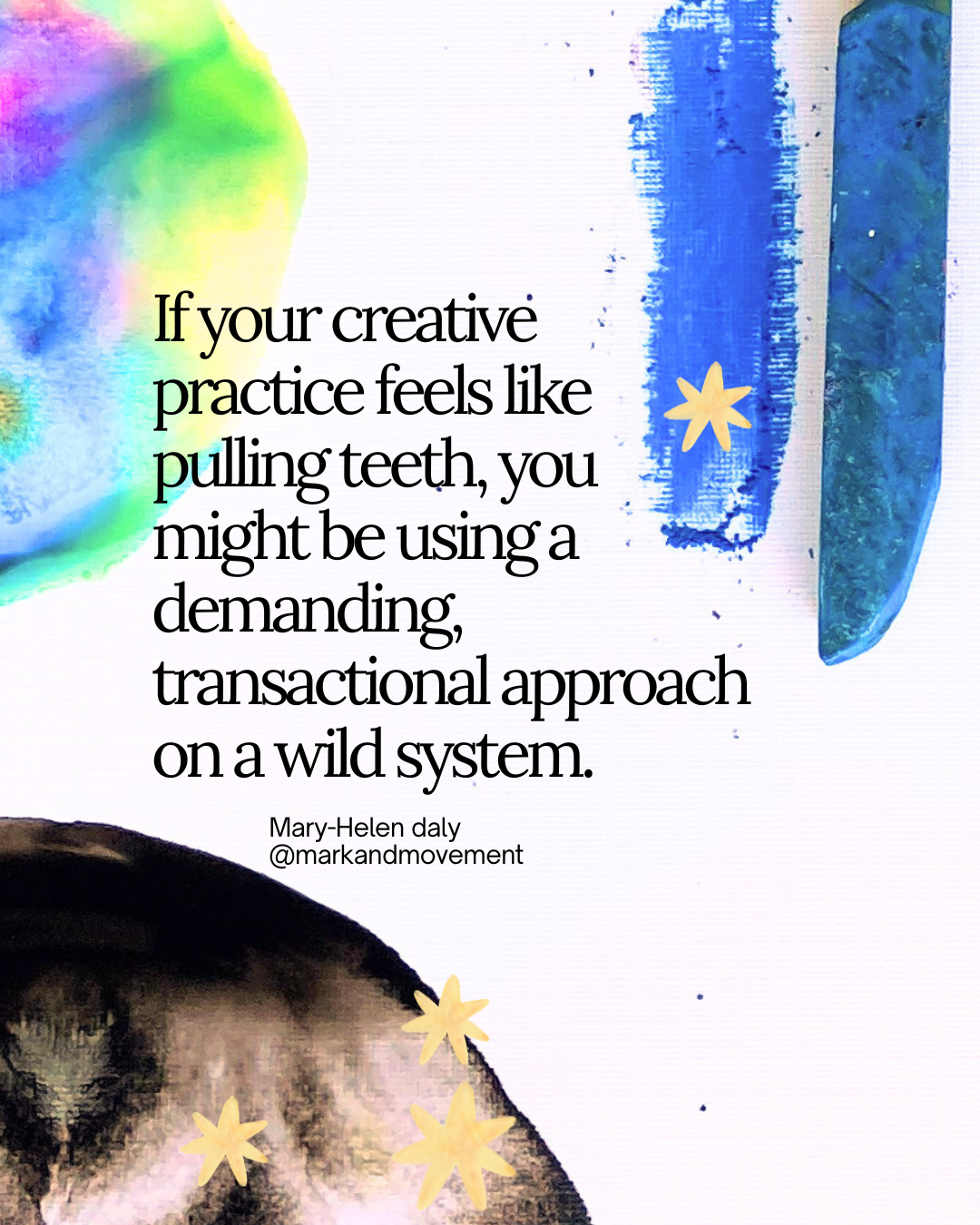
"If your creative practice feels like pulling teeth, you might be using a demanding, transactional approach on a wild system."
Illusion of Control
Your inner creative is not a trained pet or a machine. It is an untamed, intuitive system that has managed to remain untouched by life’s conditioning. It has autonomy. If our approach is disrespectful, rigid, or demanding, it will protect itself by retreating or shutting down completely.
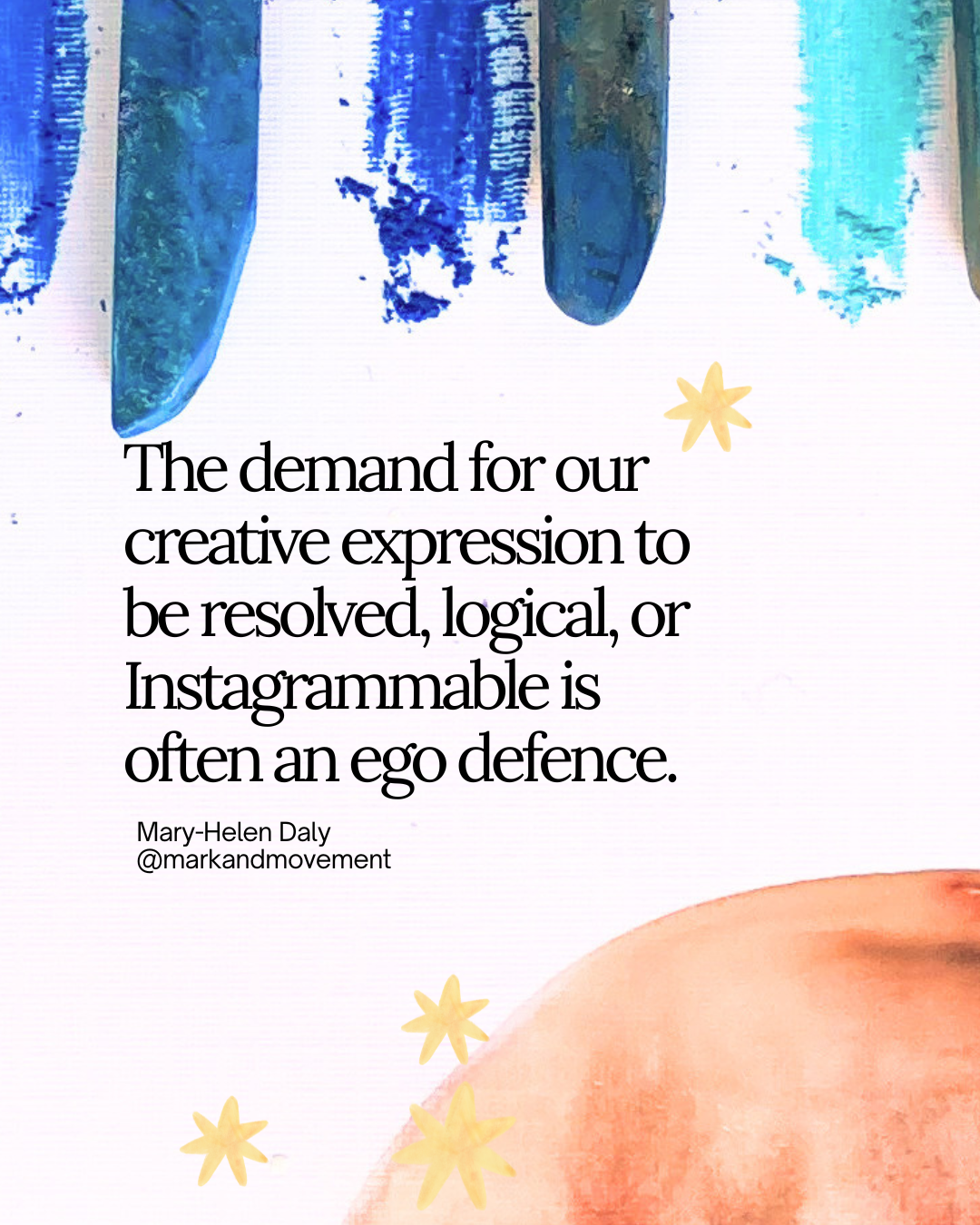
The demand for our creative expression to be resolved, logical, or Instagrammable is often an ego defence. It is an anxiety-driven coping mechanism—a way of trying to control the narrative and hold up a particular version of ourselves. That facade feels safe, but it keeps us from becoming our truest, most authentic self in the world.
Respecting the Wildness within you
The inner creative is a wild system. It doesn't care about your timeline or your need to get it right and perfect the first time. While it might seem messy, or feel like a negative trait, or like something separate from you, it is actually a vital part of your internal ecosystem. It is not something to erase or suppress.
"You are not trying to trick it into revealing itself; you are allowing yourself to become one with it. You have to prove you are willing to match its nature in order to step into its energy."
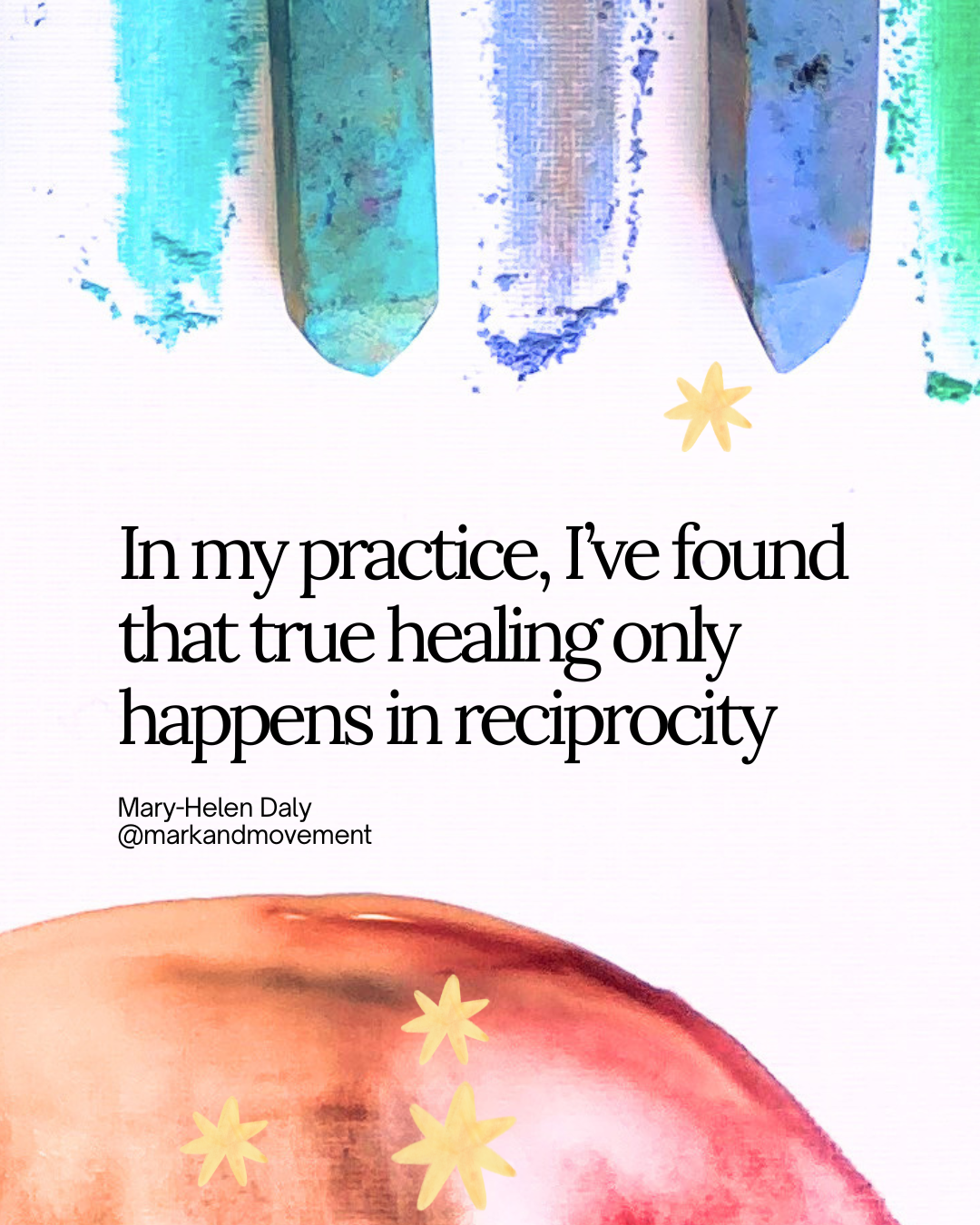
You cannot force a wild system to perform through a barrier. True healing only happens in reciprocity. It requires us to step back, clear our agendas, and open up lines of communication that are entirely untainted by a desired outcome.
When we talk about healing, we are really talking about moving out of survival and into connection. In my work as an Transpersoanl Art Therapist, I see how our nervous systems are fundamentally designed for this. They are constantly scanning our environment—and our internal landscape—for cues of safety.
If we treat our inner creative as a target for our "filler grass" demands, our nervous system perceives that as a threat, triggering a fight, flight, or freeze response. We lock up. We become rigid. We move into a state of protection rather than expression. We contract, become smaller.
This is where the idea of a container becomes so essential.
Think of a therapy space—or even just the intentionality of a creative practice—as a physical and relational container. It is a space that is designed to see, hear, and feel you exactly as you are. When you enter this space, your nervous system begins to recognise that it is finally in the presence of something that isn't trying to manipulate, demand, or fix it.
It is a reciprocal exchange. You show up with your “mess,” and the container holds it. You don't have to perform. Because the container is safe and stable, your nervous system starts to shift. It begins to down-regulate, moving away from that frantic, survival-based state and into a state of "rest and digest"—or, as I like to think of it, a state of creative receptivity.
In this state, the walls we’ve built to protect ourselves from our own feelings start to soften. We aren't "shoving the grass" anymore; we are simply sitting in the presence of our own wildness, waiting to see what unfolds.

Befriending Your Inner World
Stop shoving the grass. Sit down quietly at the edge of the page, and let the wild thing come to you on its own terms.
Drop the expectations, the shoulds, and the outcomes. Be with your inner wild exactly as it chooses to present itself in the moment.
Ask yourself:
How have you been approaching your inner artist lately?
Are you an impatient tourist at the fence, or a gentle, friendly guardian?
What kind of relationship would you like to have with your creativity?
Thanks for reading!
I’m Mary-Helen. As a Sydney-based Transpersonal Art Therapist, counsellor, and recovering perfectionist working worldwide with folk via zoom. I help people stop white-knuckling their way into their inner world and staying in logic loops to bypass feelings. Together, we work to dismantle that friction and start building actual psychological safety from within.
If you're ready to move past the resistance and start befriending your inner world so you can be fully expressed in this life, let’s chat!