When Self-Care Becomes an Escape: Are You Soothing or Stagnating?
We are often told that if we just find the right yoga class, the right creative outlet, or the right meditation practice, our stress will finally dissolve.
The wellness industry often turns into a black and white space. It suggests it has the answer for everything. But we have to admit that no one really has all the answers.
It is easy to find yourself in circles. You can spew your troubles into the void of a Reddit sub or a Facebook group and get 50 different answers to a mysterious pain, sensation, or experience. You end up with more noise, not more clarity.
Yoga, art, and meditation are wonderful. They are vital, life-giving ways to engage our whole being. They offer us moments of respite and a necessary soft landing place in a hard, demanding world. The problem starts when we use these practices to escape ourselves rather than soothe ourselves, in order to build the capacity to attend to and work through our issues.
A wake-up call from an ex-Shaolin monk
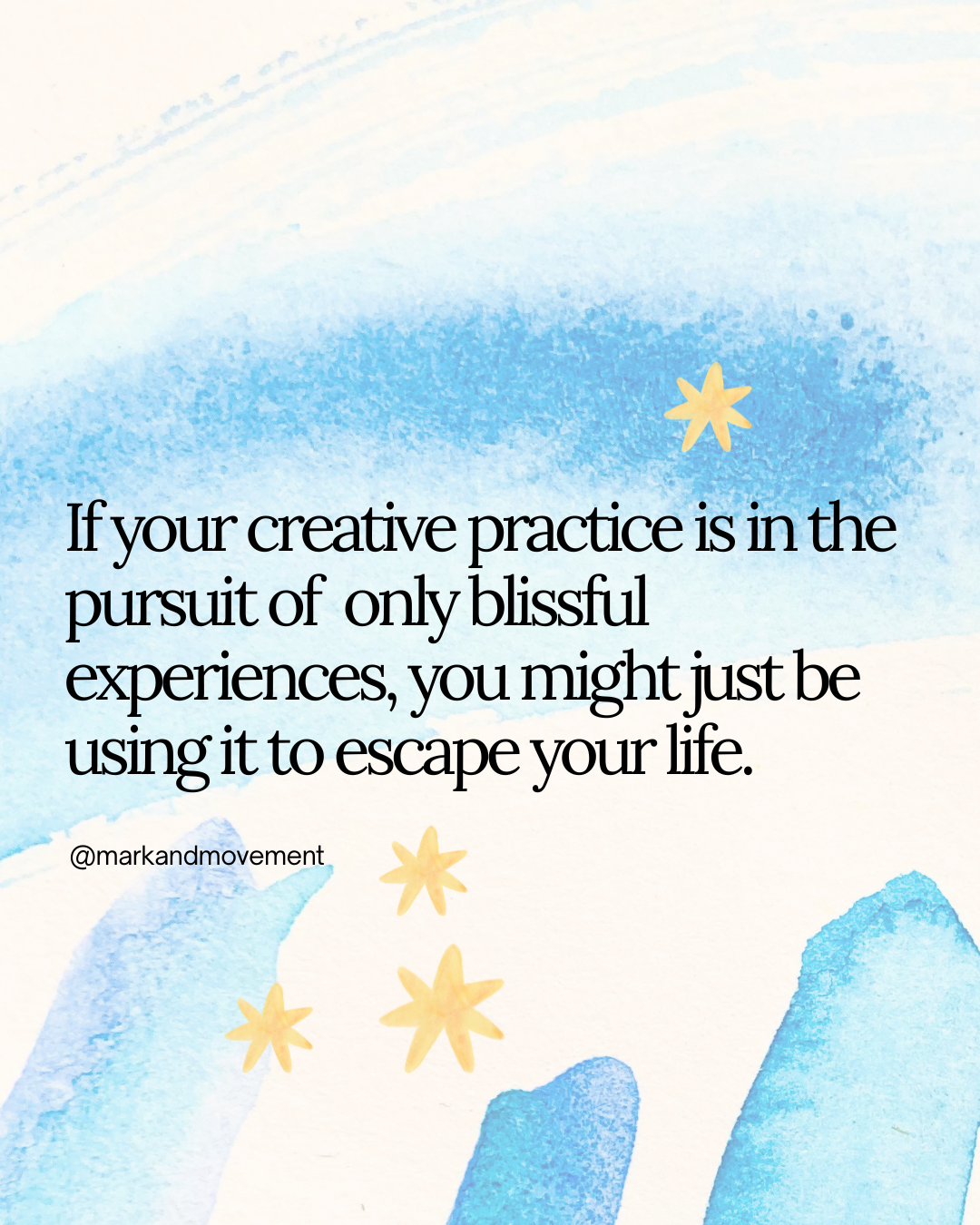
Last year I attended an Qi Gong event where an ex-Shaolin monk walked in, looked at a room full of us and said: "If you practice yoga on your mat, but step into the world and instantly flip into stress, your practice isn't working. You are just using it to escape your life."
That comment stayed with me. It applies to our creative practice just as much as our movement practices. We have romanticized creativity as a gentle, soothing hobby. We invite people to ‘slow down, be in the being, not the doing,’ but rarely provide the greater context for why is so hard and why this might actually not be a lasting solution and might be like a bandaid. We think it is a way to turn off the brain and tune into good vibes. And look, sometimes, a temporary escape is exactly what a taxed nervous system needs to survive a hard season. But when escape becomes the permanent endpoint, we are no longer practicing. We are hiding from ourselves.
Friction is Part of the Work
If you feel unraveled everywhere else in your life, a band-aid practice is not solving the underlying problem. If these practices were truly shifting the underlying issue, people would be noticing the changes in you, and you would be noticing them too.
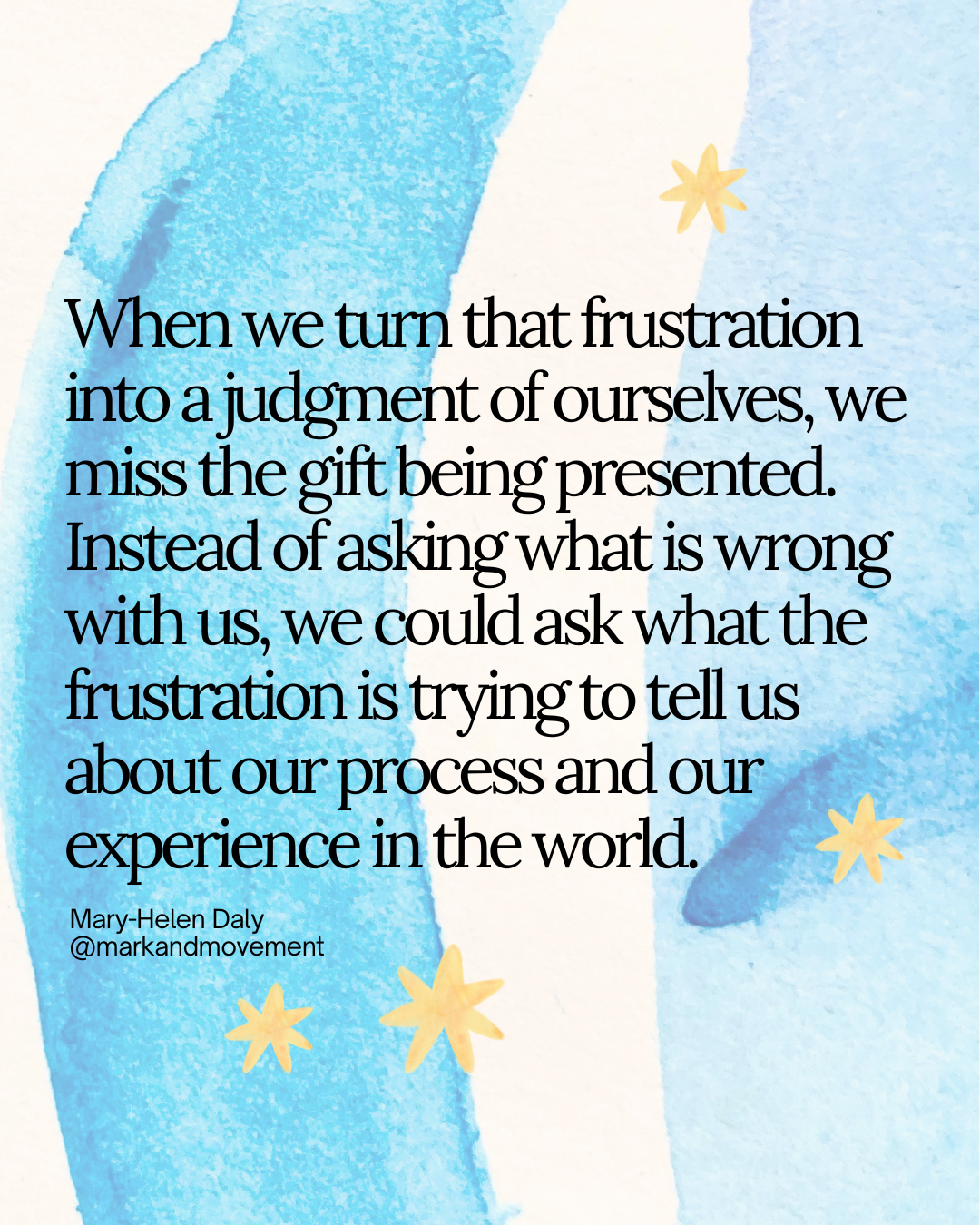
The internet sells a glossy version of the artist's creative life, particularly on social media. What they edit out are the hours spent agonizing, the blocks, the muddy colors, endless mistakes, mishaps and the mini existential crises. We tend to view that friction as a failure. We think it means we are doing it wrong. In reality, friction and tension are normal parts of the creative process. They are a micro-dose of real life happening in front of you. This friction can help you see how you attend to tension in broader aspects of life. Do you avoid, approach, or blame?
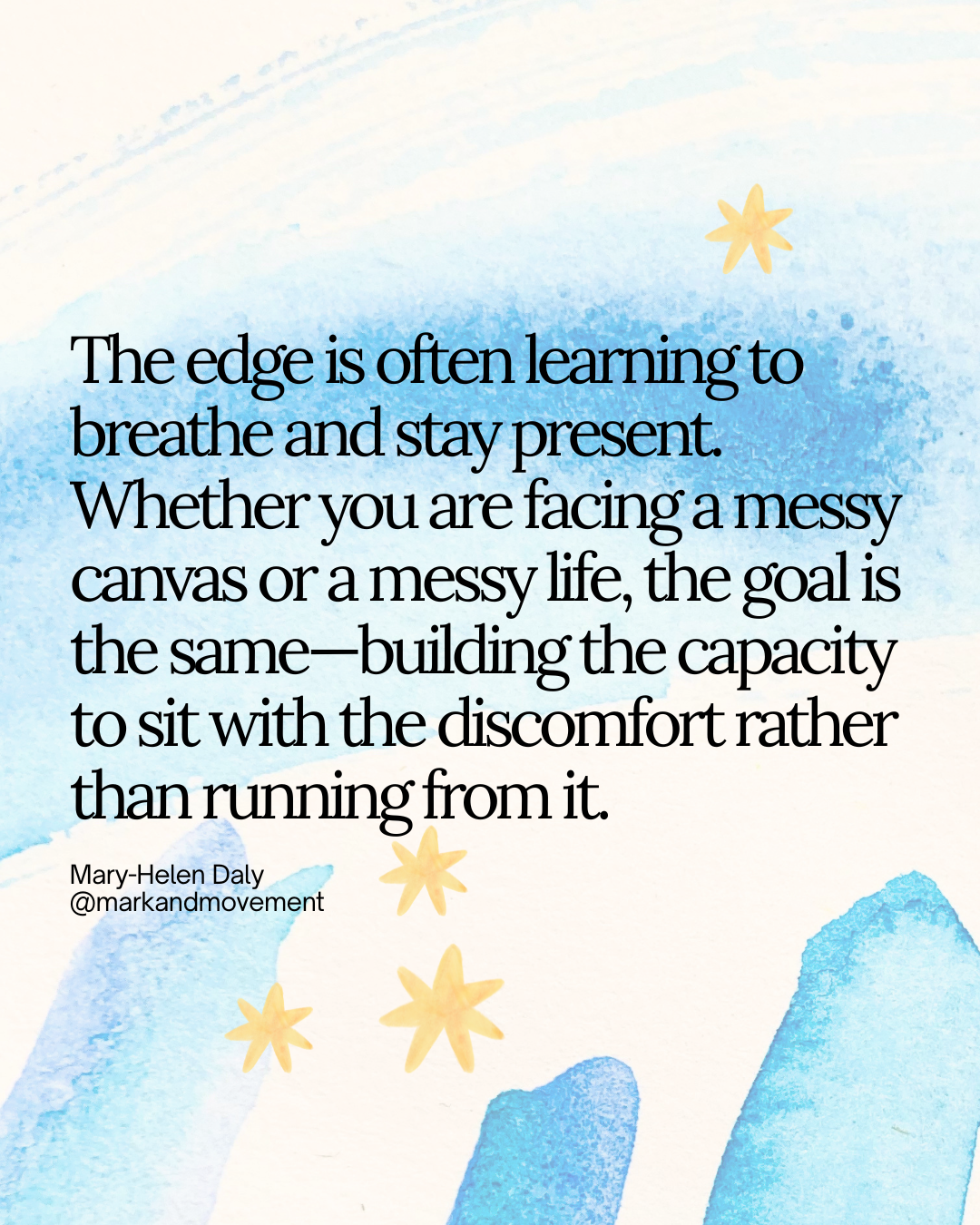
When you feel frustrated or stuck while making art, that is actually a good thing. It is a sign that the process is working. Sometimes the edge we are working with is to learn to breathe, stay with your experience, and be with the discomfort of a messy piece of art. In this space, you are building the capacity to be with the messy, uncomfortable parts of your actual life.
And sometimes, we disengage and say: "not today, my nervous system just does not have the capacity to meet this right now." This is ultimately where we want to be—having an open and compassionate line of communication with our whole system and actioning its requests, not suppressing or shaming them for having needs.
Depth work is a contract with yourself
There is a difference between art as a balm and art as deep inquiry. Using art as a balm is a beautiful, necessary practice. It helps you maintain. But if you are using art only to patch up a high-stress life, the gaping pit of anxiety or unprocessed emotion remains unaddressed. Sometimes we have to patch ourselves up and get on with things, but if this becomes the norm, then we might be doing more damage than good.
This is where the container of therapy becomes helpful. In transpersonal art therapy, the contract is different. It is not an art class, it is not always blissful, and it is not an escape. It is a contained, relational space designed to hold the friction, the mess, and the unraveling, so you do not have to navigate it alone.
We stop looking for a temporary fix and start looking at the gaps with genuine curiosity. We do the depth work to see what in your life is and isn't working so that your growth filters out into the rest of your world. Integration happens in between sessions. It starts with the willingness to stop white-knuckling your way through life and start building a container that can actually hold what you are feeling. The goal is to be so in contact with your inner world that you have the internal resources to help you choose which external resources to engage with.
Knowing Your Space
Just like a yoga class isn't therapy—even if it feels like it—not all art experiences are either. Knowing which "space" you are in helps you set clear boundaries and expectations. People often go awry here because they don't understand that not every space is built for deep processing.
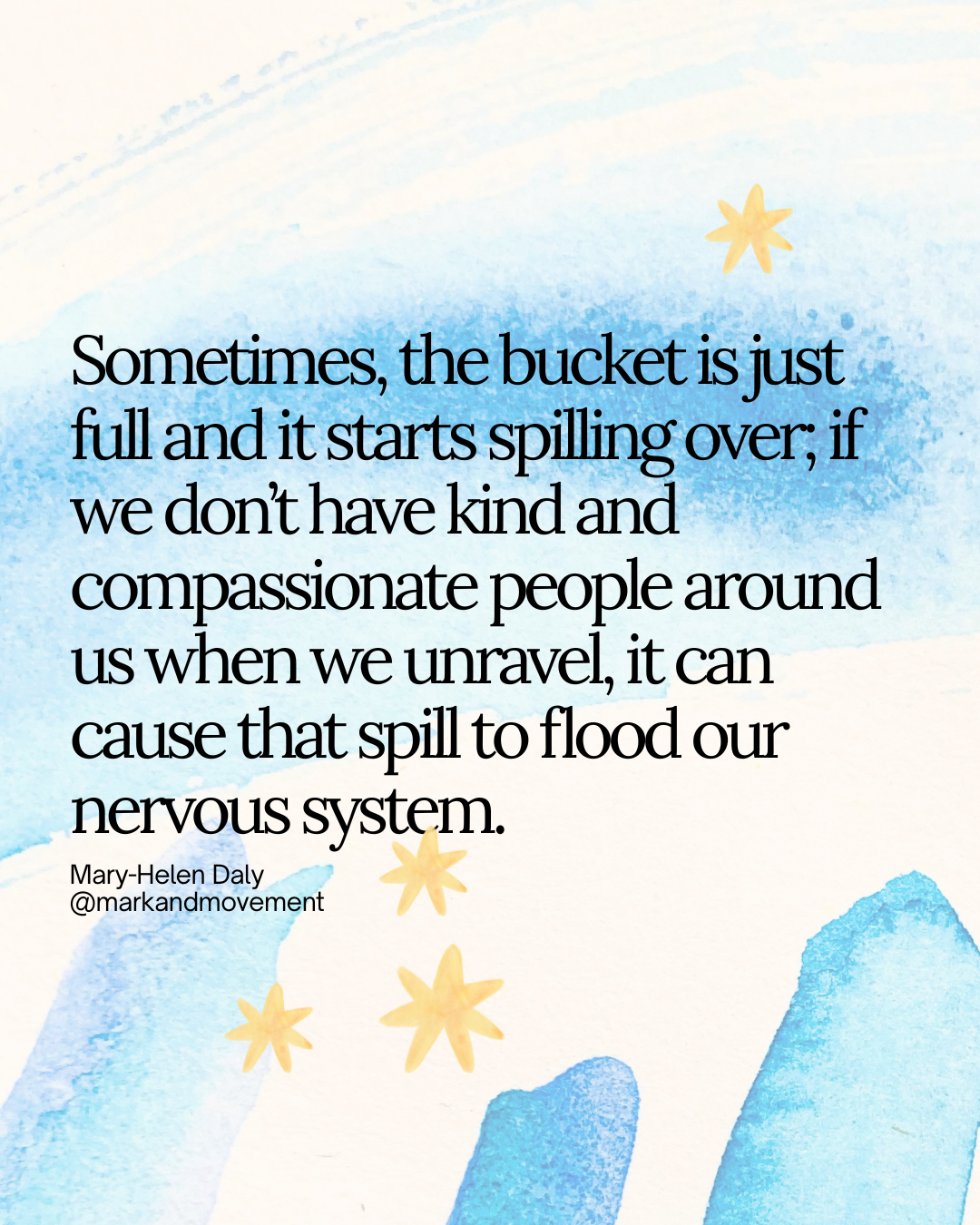
Sometimes your "bucket" is just full and it starts spilling over. Art and movement practices can take us into deep water very fast because our body doesn't lie to us the way our mind does. We have to be intentional about where we take that material.
Self-soothing: Intentional, repetitive art helps to center a taxed nervous system. This is about regulation and finding a soft place to land.
Creative practice: This is for building skills, developing ideas, and pushing your technical boundaries. It is about the work itself.
Deep exploration (therapy): This is for expressing your internal experience to see yourself more clearly, beyond the ego self.
When we have sudden shifts or breakthroughs in a general yoga or art class, it’s usually because we have been doing the underlying depth work elsewhere. When your intentions, boundaries, and expectations are aligned with the space you are in, you are far less likely to feel unraveled when the work gets heavy.
But we have to be real: sometimes we do unravel. That is so human. If we are lucky enough to have kind, compassionate people around us in those moments, it is a blessing. But if we don't, that unraveling can cause the bucket to overflow and flood our nervous system. This is why having a held, professional space to process those spills—rather than just hoping we can contain them alone—is so important.
Journal Prompts
If you have made it this far, I invite you to sit with these questions:
Do you have a clear and compassionate line of communication to your inner resources?
How might life be different if you were able to meet your challenges and not run away from them?
If you were to be completely honest with yourself, are your self-care practices building capacity, or are they acting as a band-aid on a festering wound?
Work With Your Edge
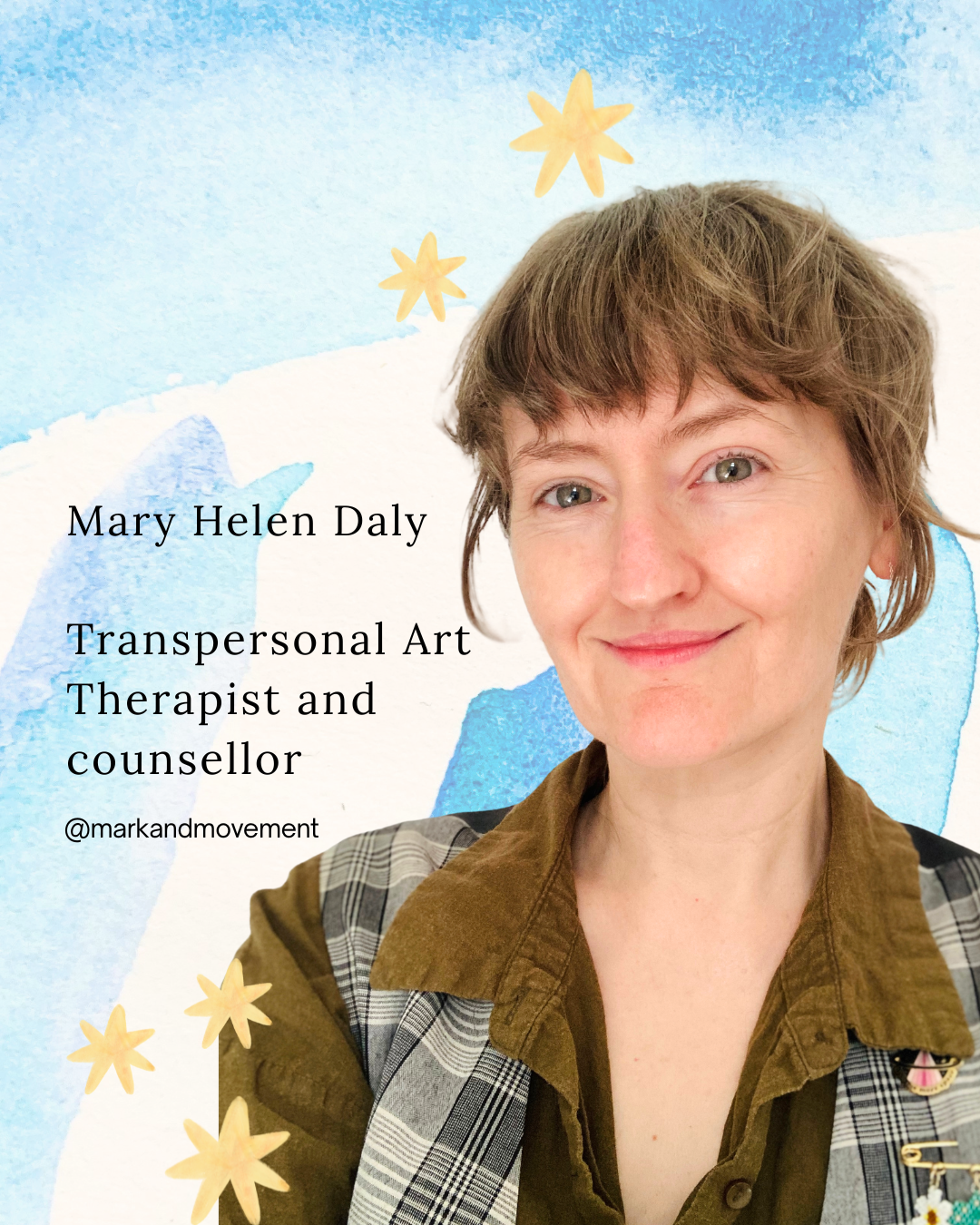
Hi! I am Mary-Helen Daly. I’m Transpersonal Art Therapist and counsellor, I help you build a safe container to explore your edge—to unravel and re-ravel in your own time.
If you feel like you are ready to stop using your ‘selfcare’ as an escape hatch and are ready to explore your edge, you do not have to do it alone.
If you are curious about what this actually looks like in practice, you can find out more about my approach to Transpersonal Art Therapy here.
Free Resources
If you want to keep exploring themes, feel free to check out some of my other reflections:
I also upload creative practies and mindful art making series over at Youtube