Beyond the Label: What We Really Mean When We Say "I'm Not an Artist"
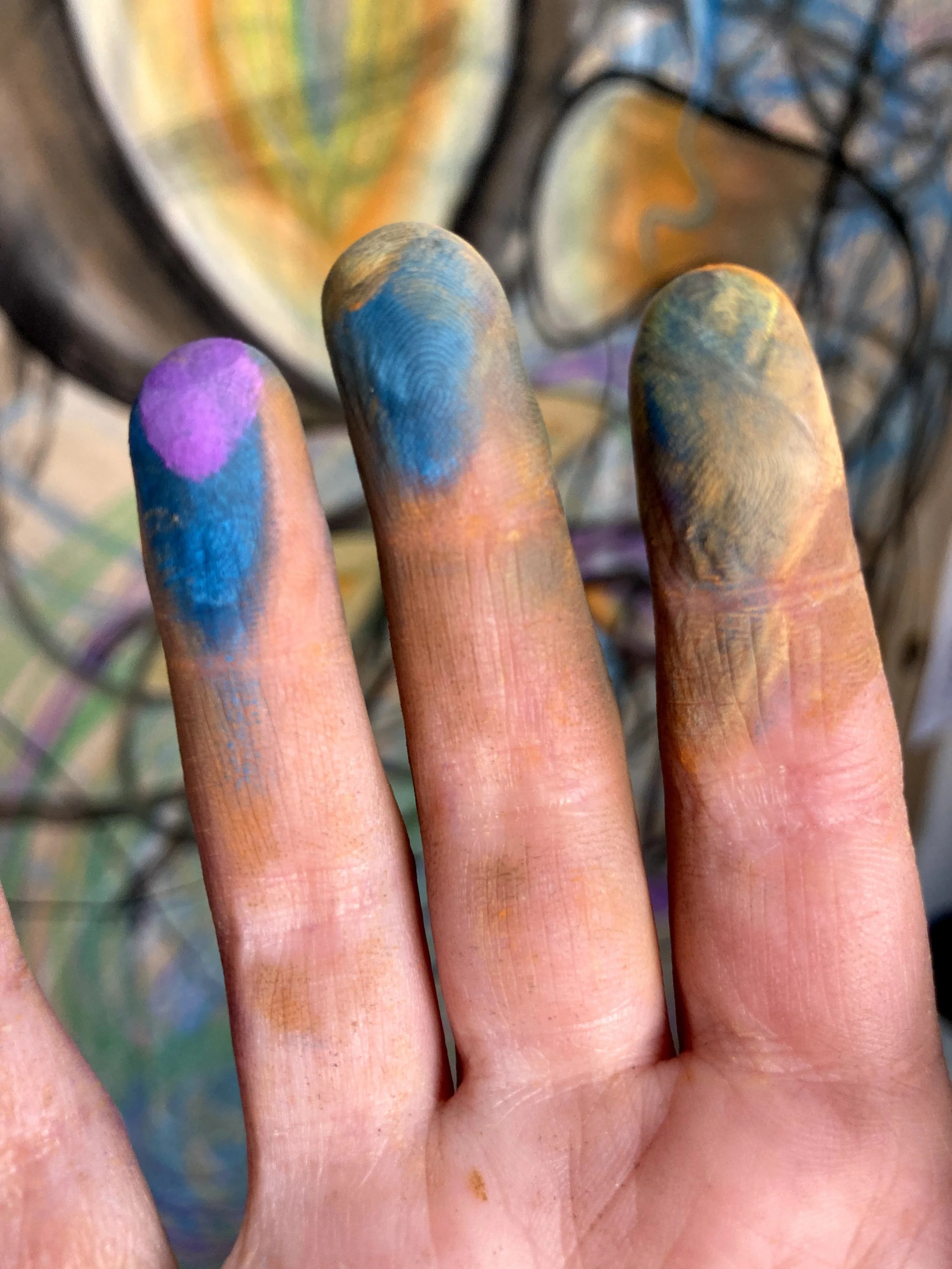
I hear it all the time: "I’m not an artist," or "I’m just not very creative."
What I am usually hearing underneath that—as a transpersonal art therapist and creative workshop facilitator—is "I’m scared." It is a protective statement, a gentle buffer that tells me from the very beginning: please don’t push me out of my hiding place.
And yet, here is a person who has chosen to step into a space, sit down in a session or a workshop, and move towards something. There is clearly a pull there, even if they aren't sure what it is yet. So when I hear that leading statement, I get curious about this immediate devaluing of the inner creative self.
It makes complete sense why people get confused. We mix up the practice of art therapy with the professional identity of being an artist—and all the varied ways someone can be an artist in this world.
On one hand, art therapy is a therapeutic container and process. Just like talk therapy offers a space to explore yourself through conversation, art therapy uses creative expression as a lens to explore who you are and what your experience in the world is. Depending on the practitioner—whether they are an expressive arts therapist, creative arts therapist, or a transpersonal art therapist—they bring a specific framework to hold space for that experience.
Then we have "the artist." That can be a role, a job, or a dedicated trade. It can be someone honing artistic techniques over years—putting work in galleries, selling at market stalls, taking on contracts, or dedicating hundreds of hours to mastering a craft.
So when someone comes into a two-hour workshop or a one-hour session and says "I'm not an artist," I think: well, no, of course you're not—you aren't here to do a job. You aren't expected to master a two-year art curriculum in a single afternoon, nor are you expected to make a "masterpiece" to be critiqued by the art world. That expectation needs to be let go of, even as we validate why it was there in the first place.
People come in carrying heavy expectations of who they are and who they aren't, what they can do and what they can't do. We get tangled up in packaged identities formed when we were very young, built on someone else’s ideas of success, values, what is considered "good” or worthwhile.
When someone says "I'm not creative," replying with "Everybody is creative!" doesn't actually help. It glosses over the real vulnerability they are bringing forward. What that person needs is space to crawl before they walk, and walk before they run—safe stepping stones so they can feel brave enough to tap into their inner world and awaken their inner creative capacity.
When you step into an art therapy session or a creative workshop with me, I am not there to teach you to draw like a fine artist, and no one is going to judge what you make. Techniques might be offered, but only to build your capacity and confidence—to give you tools and scaffolding to explore the experience of you from moment to moment. We are here for the being, not the doing.
You are not making art for a gallery, nor are you trying to produce a polished, marketable product. And if you do feel a strong drive to create a finished product, we look at that with curiosity, too:
Why is there a push for a specific outcome right now?
What part of you needs to feel seen through that?
What part of you needs to feel defined, complete or finished?
There is space for all of that too but we want to be curious about.
Instead, we are looking for the signs of you—clues left behind showing the way forward, or an opportunity to experience yourself without judgment. Even if the experience is challenging, we learn how to stay with the experience of ourselves in real time.
We want to set aside the commercial definition of "art" and see creative expression for what it really is: a vehicle to experience yourself beyond the boundaries of the ego. In talk therapy or when building a resume, we can easily stay trapped in the logical, analytical side of the mind, describing who we think we are—often holding up a false mirror built on old conditioning.
While words and talking certainly have their place, we cannot rely solely on logic to reveal our real story. Creative expression offers a passageway into the vastness of who you are, allowing you to connect directly with your soul, your essence, your strengths, and your gifts in real time.
When guided skillfully with gentle guardrails, these creative and altered states don't overwhelm you by dumping you into an unbounded space; instead, they give you space to explore the complex, multi-faceted landscape of your inner world far beyond what language alone can capture.

Systems and the Loss of Valuing Craft
We live in a culture that prioritises measurable outcomes, productivity, and immediate answers—a space where it feels like you shouldn't do anything unless you can monetise it, turn it into a side hustle, or package it up.
When the Industrial Revolution happened, people imagined it would create more time to simply exist. In fact, this is what many people think AI will do for us now, too. But historically, society shifted away from valuing skilled craftsmanship toward mass production and replication for the masses.
While that concept was not inherently bad in theory, the reality we are living in tells a different story. We are seeing the true impact of the quickening process of everything: fast fashion, fast food, environmental destruction, and the exploitation of people's labor. Paired with widespread housing insecurity and an inability to be with delayed gratification, it has created a vicious cycle. What was originally created to save us time and labor has backed us into a corner, leaving us drowning in the water that was meant to save us.
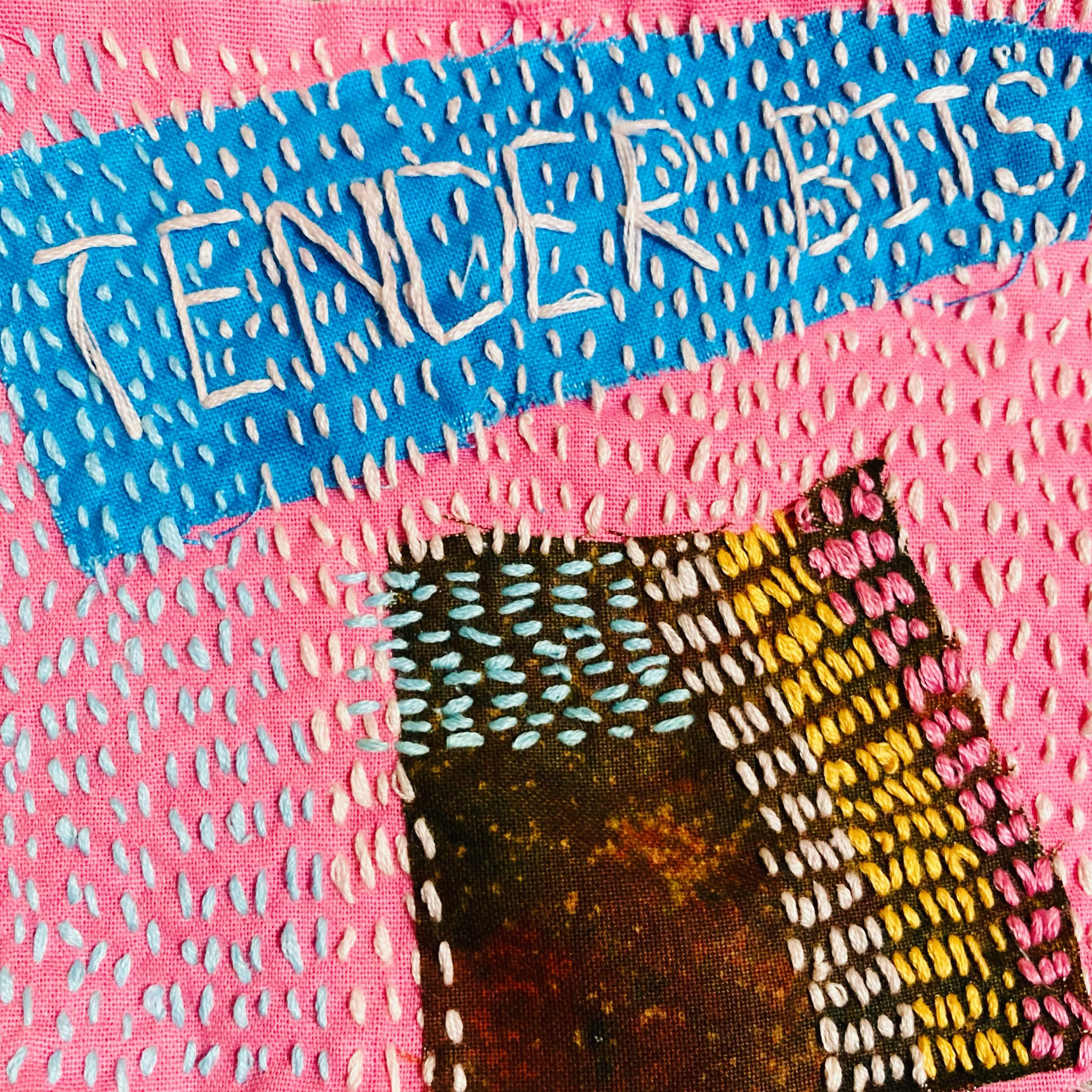
Losing the skill of craft is like losing a language. Having worked in youth spaces, I have seen firsthand what this looks like for young people who haven't had basic crafting skills passed down to them. This isn't about placing blame; it illuminates what skills our culture deems valuable and what it tosses aside.
The belief that a skill has no worth if it doesn't yield a financial return—or if a machine can reproduce it—creeps into how we view ourselves. Art gets reduced to a meaningless activity, a minor distraction, or a pointless endeavour if it can't be sold. The result is a real disconnection from the soul, replaced with metrics and KPIs.
This is a tricky place to stand. Is it really that wild of an idea that your primary purpose in life is simply to exist? To experience living, rather than to hustle, grind, or worry about how many zeros you die with in your bank account? How can we discover our soul's mission if we are using LinkedIn profiles and social media followers as our primary metrics of success?
This is the noise—the noise that makes it hard to hear yourself. If you are caught in the trap of wanting to express yourself, but feel you must have a logical reason or a guaranteed outcome first, you might be setting yourself up to fail. That isn't your fault; it is simply the map you were given. But it isn't your map.
In therapy, we try to untangle all of that. We don't throw away who you’ve been and demand you become someone else. Instead, we ask with curiosity:
How did this version of you come to be?
Who reflected this image back to you?
What spaces are you in that reinforce this?
Does this actually feel like you?
The invitation here is to expand the context of how you came to be, and how those who nurtured you came to be—whether their influence was well-meaning or not. From there, we can start to ask: What can I begin to let go of? And that isn't a quick or rushed process either.
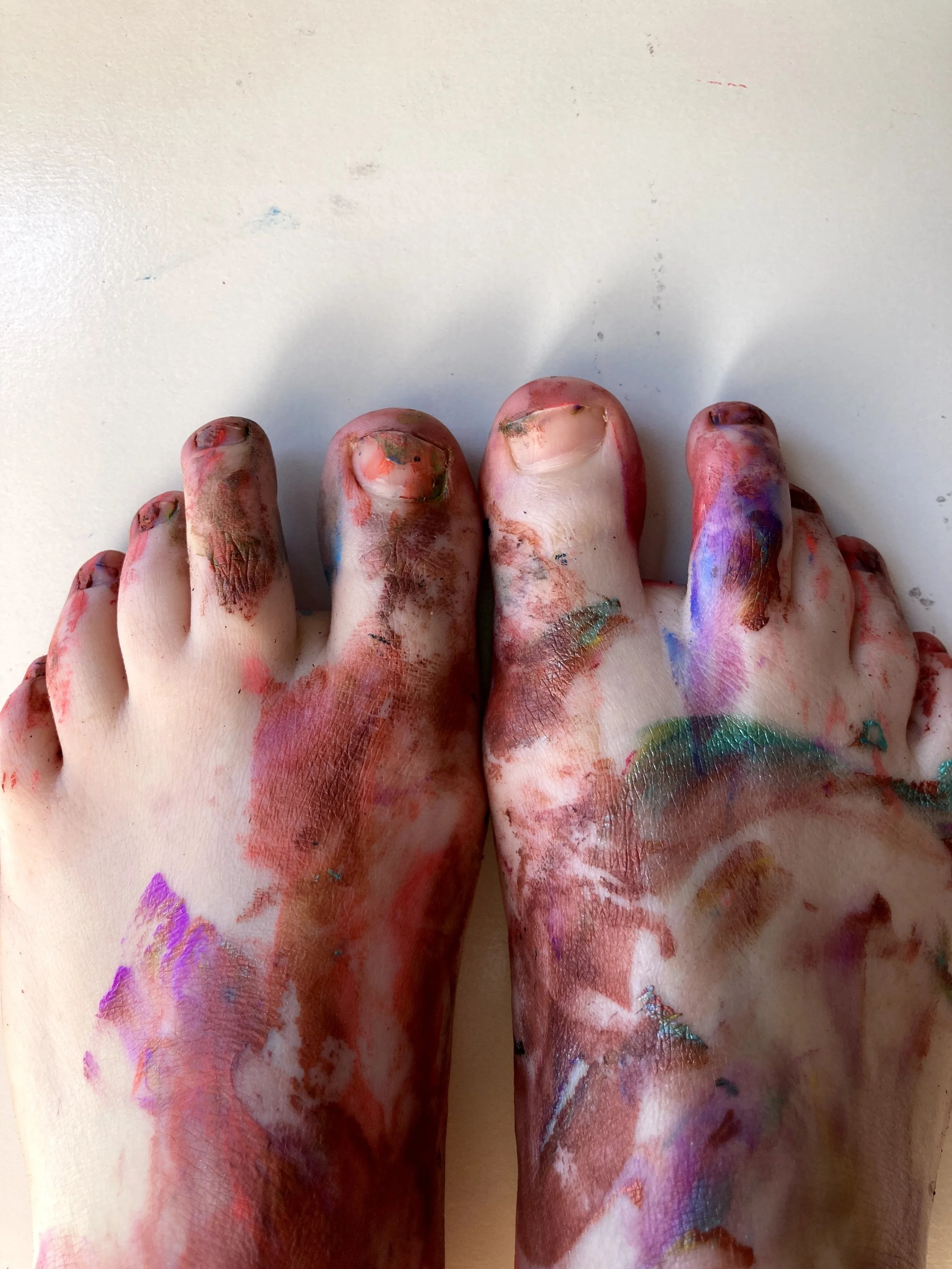
Unlearning Performance and the Protective Ego
When culture demands constant definition and performance, it squeezes us into tight spaces where everything we do has to make sense to someone else. We see this curated performance everywhere—especially on social media, where people construct specific characters either to feel safe or to be validated.
There is immense pressure to have it all together, but what about being unfinished, unresolved, and simply in the process of being a human being? What about just being alive and letting that be enough, without the constant need to strive?
When we create that kind of internal space, our soul's whispers can finally cut through the noise. But doing so means sitting directly in tension with the ego's internalisation of the culture we consume daily.
Stepping into creative expression asks us to let go of the pressure to perform, unlearn who we think we are, and directly experience who we are. That "pressure to perform" takes many forms: masking, over-conforming, accommodating everyone else at your own expense, or living out a parent’s or society's projections of "success."
Experiencing who we really are is a process of unbecoming what we’ve been shaped into first. That process can bring up grief, anger, and sadness. But when we step back and see how we came to be with compassion and curiosity, we step away from blame—of ourselves or others—and begin carving a new path as the active creator of our own life journey. It is not always simple, but it is deeply worth being with.
If you grew up without a clear, supportive mirror, your self-image was likely built on someone else's expectations. Even well-meaning caregivers project their own fears onto us, teaching us that stepping out, being messy, or chasing our true inner world is unsafe.
When children make marks, they make gestures purely to let what is inside move outward. Children don't worry about being messy because messiness isn't a concept they understand yet; it is something they are taught. The ego’s drive to protect you by keeping you small, quiet, or hyper-disciplined is just trying to be helpful. But if you feel a persistent pull towards something more, it’s worth asking: What is this holding or stuckness trying to protect?
Body, Shape of Repression, and Transpersonal Exploration
When we suppress and repress our needs, emotions, and truths because they feel "too loud" or unsafe, they don't just disappear. They take shape in the subconscious mind and body, often showing up as chronic exhaustion, tension, or burn-out.
In a transpersonal framework, when physical or emotional distress arrives, we don't bypass medical support, but we do ask with curiosity:
What wants my attention here?
What is this trying to tell me?
What is the bigger story here?
Your inner world is your compass. When we aren't taught how to navigate or trust it, that compass gets wonky. It starts treating everything as a threat, telling us that full self-expression is far too risky, so we stay contracted and safe.
Allowing the body to express through drawing, painting, or sculpting gives those hidden parts a way to be felt and seen without being overwhelming. If overwhelm does arise, a grounded space allows you to pull back gently, honour your nervous system, and work at your own pace.
This often means discovering what your pace actually is. So many of us are constantly rushing without even realising it because we are so accustomed to speed and a complete lack of transition. When we are finally offered space to slow down, that stillness itself can feel a little threatening to our system.
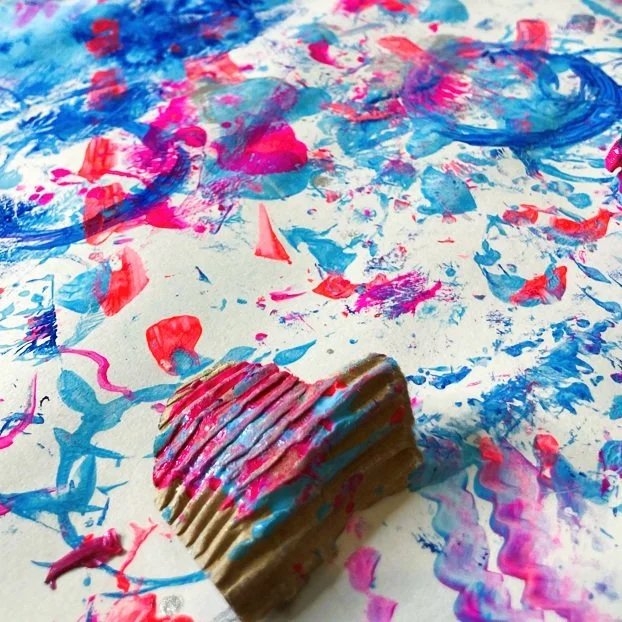
Dancing Between Expression and Impression
Art therapy is often spoken about as purely "getting things out" (expression). But real integration happens in the dance between expression and impression.
We operate so much of the time through impressions—what comes from the outside world and is left inside of us, shaping how we move through life through implicit memories, moments of distress, or overwhelming events.
In this work, we move between two spaces:
Expression: The outward movement of what is inside—allowing, revealing, and bringing the unseen into the light so you can observe it with distance, rather than being consumed by it.
Impression: The process of receiving, containing, or safely storing things that cannot be easily processed—like grief, distress, or implicit memories—so there is a reduction in how much power they hold over your present life, without requiring you to relive specific distressing events.
First, we let the inner world spill out so it can be seen without consuming you. Then, we stay curious about what that mark gives back—how it can safely hold what is too heavy to carry, or leave you with a new, grounded impression of yourself.
You Are the Point (Not the Art)
Coming into creative expression isn't about becoming a gallery artist or turning a hobby into a product. It is about returning to your soul’s journey—stepping out of auto-pilot, survival mode, and the 9-to-5 grind to ask: How do I actually want to spend my moments in this life?
Many of us were never resourced to manage or trust our inner worlds. When our internal compass gets wonky, we treat everything as a threat—including our own full expression.
Stepping into this inner space is a quiet act of bravery. It’s not about forcing yourself or anyone else to change; it’s about coming into contact with the essence of who you are beneath the roles and masks.
The art is not the point. You are. You are an ongoing body of work to be experienced with kindness, curiosity, and care.
Reflective Prompts to Take to Your Journal
If you feel a persistent flatness, if you find yourself daydreaming about a more creative life, or if you feel a quiet envy towards those who express themselves freely, sit gently with these questions. You don't need instant answers; let them unfold in your own time.
Why is creativity important to me?
What does it mean to you when you see others express themselves? What would it mean if you allowed yourself to do the same?
When was the last time I felt free to express myself?
Where were you? Who were you with? What did it feel like in your body?
How would my life be different if I felt safe and free to express myself?
(Note: We live in a world with real oppressive systems, discrimination, and environments where full expression hasn't always been safe. It makes complete sense if you've hidden away to protect yourself. For this question, temporarily suspend those barriers and ask: if safety and freedom were fully present, what would shift?)
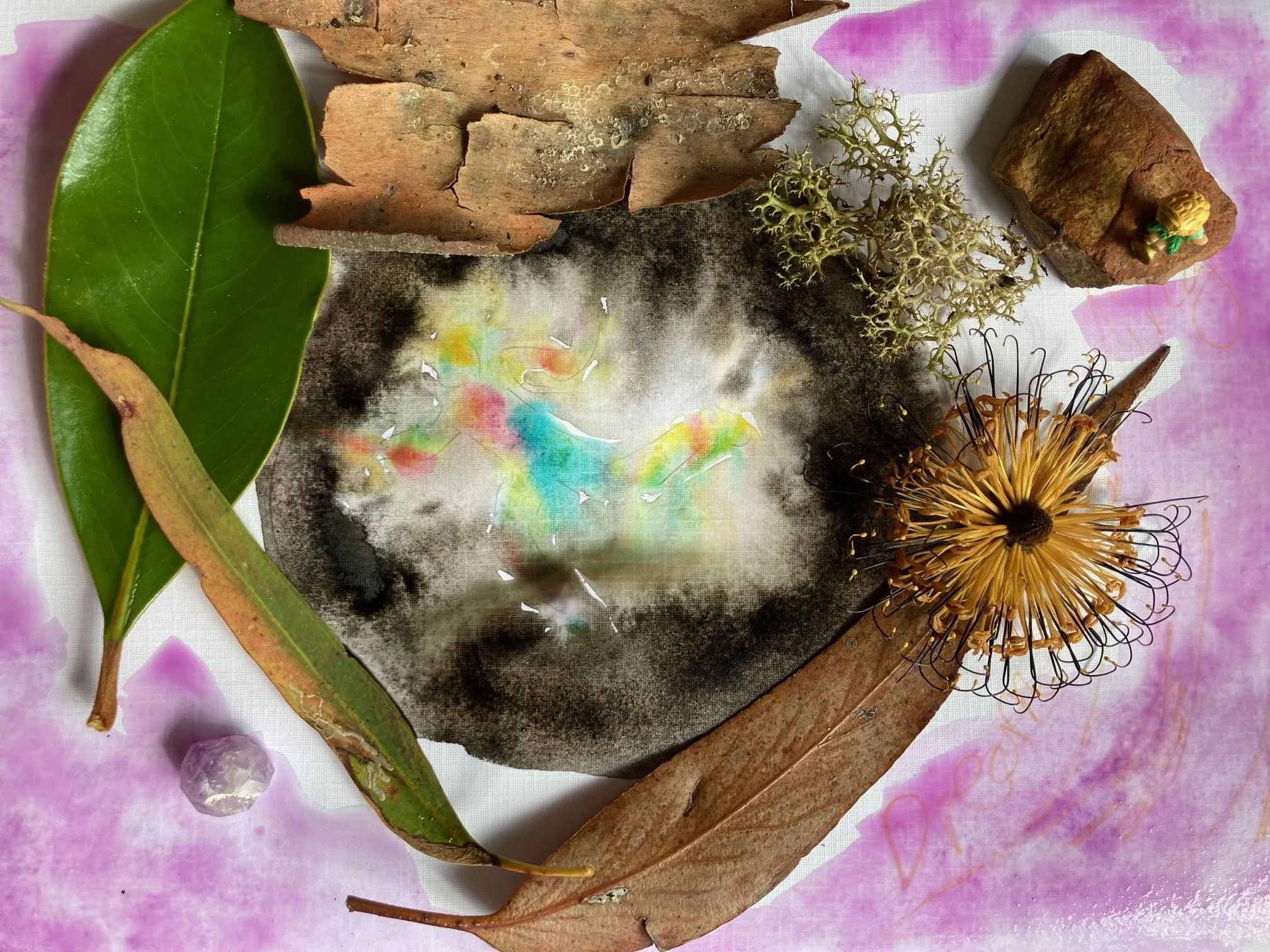
Artist of Your Own Life
So, when that phrase slips out—"but I'm not an artist"—let it be okay. It is a completely valid way to protect yourself when you’re standing at the edge of something new. It makes total sense that you'd want to hold up a little shield.
But eventually, there comes a point where you might decide to let yourself step past that shield.
When I talk about awakening your inner artist, I’m not talking about taking on a new job title, getting a gallery space, or figuring out how to turn a weekend hobby into a side hustle. We have enough reductive ways of measuring our worth in this world. This isn't about producing something to sell; it’s about finding ways to connect with yourself, to feel more embodied, and to live more fully expressed in your daily life.
Deep down, everybody carries an inner artist. We know this because children don't need a curriculum or a rulebook to make art. They pick up a stick or a crayon and just start moving, creating, and expressing without worrying if it's "good enough." That innate capacity doesn't vanish just because we grow up and learn to be “careful”—it just sits quietly in the background, waiting to be rediscovered.
You don't need to earn the right to express yourself, and you don't need to prove anything to anyone. If you feel even a tiny pull towards creative expression, trust that curiosity. You are already the creator and the artist of your own life—and there is so much waiting for you to explore.
If exploring this topic on your own feel overwhelming, working with a therapist can be really helpful. If you want to step out of logic loops and explore your inner world at your own pace, transpersonal art therapy and counselling can offer that grounded container.
You are welcome to explore how we might work together, or reach out to ask a question.
Learn More About Transpersonal Art Therapy | Book a Discovery Call