How to Make a Native Wreath & Hanging Bouquet | DIY Festive Decor
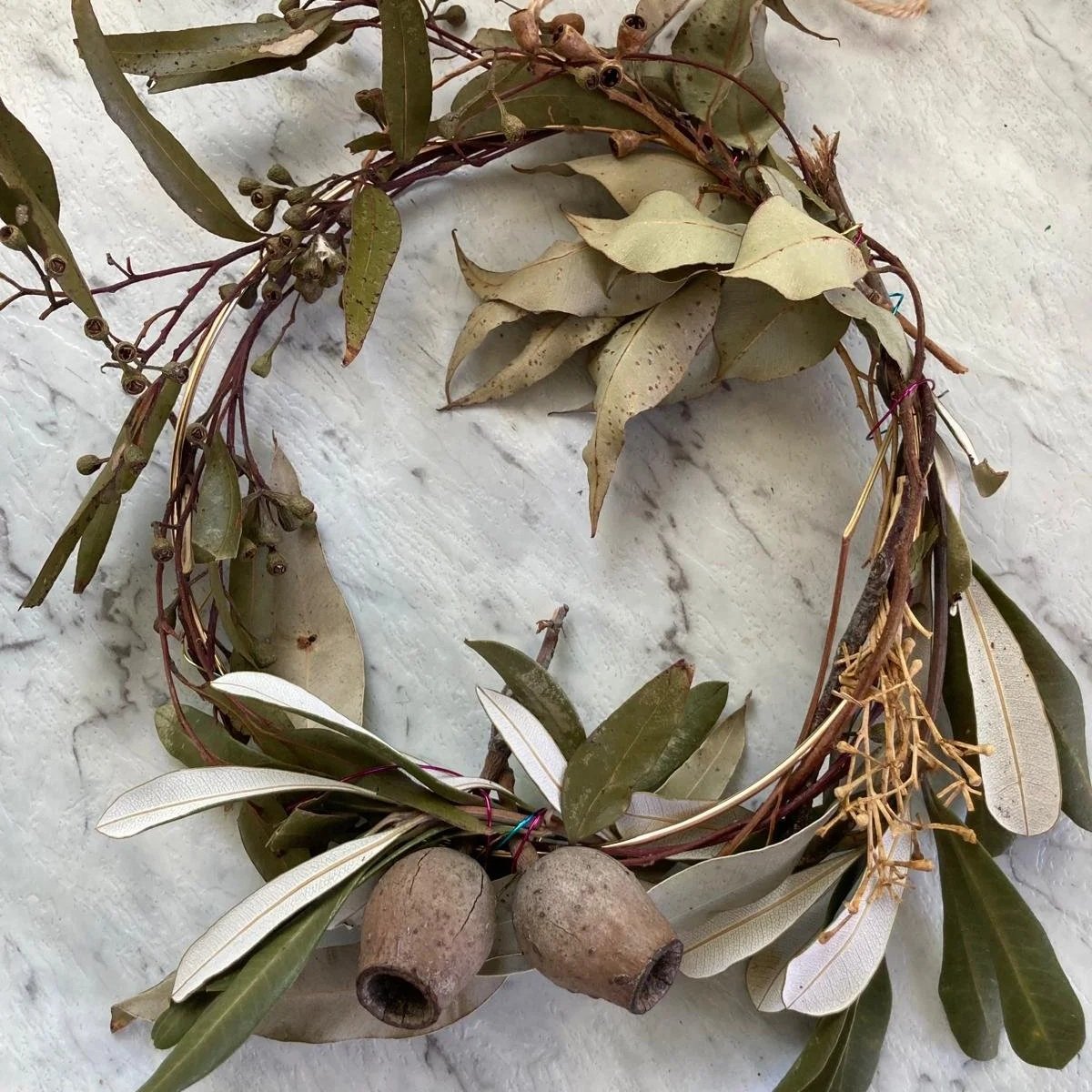
Celebrate an Festive Season with Native Wreaths & Hanging Bouquets
The festive season in Australia looks different. While the Northern Hemisphere wraps itself in snow and evergreens, we're celebrating in the summer sun with eucalyptus, banksia, and the earthy beauty of Australian natives. This year, why not create festive decor that reflects this land?
I'm creating these pieces on the traditional lands of the Bidjigal people of the Eora Nation. These pieces were found on the ground as cuttings left for collection or were dropped from trees. I’ve taken a more sustainable approach by taking what is ready to be discarded. It’s a good reminder to take only what you need, and if in doubt — leave it. Australian natives are built for this climate - they're tough, they're striking, and they dry beautifully, meaning the wreath or bouquet will last well beyond the festive season. Not only that, these plants release oils that smell absolutely beautiful.
The History of Festive Wreaths (with an Australian Twist)
The tradition of wreaths comes from European winter, where the circular shape symbolized eternal life and evergreens represented resilience through harsh, cold months. Here in Australia, our natives carry their own story of resilience - surviving drought, fire, and intense sun and as well as the impact on the environment from human activities. Creating wreaths from eucalyptus, banksia, and wattle is a way of connecting with that strength while celebrating summer abundance.
Watch the Full Tutorial
Before we dive into the written steps, you can watch the full wreath-making process here:
How to Make a Native Australian Wreath
What You'll Need:
Wire wreath hoop
Native branches and foliage (eucalyptus, banksia, wattle, tea tree)
Floral wire
Wire cutters
Hot glue gun & glue sticks
String, twine, or raffia for hanging
Seed pods or other decorative natural elements
The Process:
Step 1: Build Your Base Start by winding native branches around your wire hoop, working in one direction. Overlap as you go to create fullness. Eucalyptus branches work beautifully as a base because they're flexible when fresh and hold their shape as they dry.
Step 2: Secure Everything Use floral wire to attach branches to the hoop. Wrap the wire around both the branch and frame, twist to secure, then tuck the ends into the foliage so they disappear.
Step 3: Add Your Feature Pieces This is where your wreath gets personality. Choose statement pieces like banksia cones, gum nuts, or interesting seed pods. Secure larger items with floral wire, and use hot glue for smaller, delicate pieces. Build up layers and vary the heights - step back regularly to check the balance.
Step 4: Fill and Refine Add smaller sprigs to fill any gaps. Hot glue works well for final touches. Trim any stray wire ends and tidy loose pieces.
Step 5: Add Your Hanger Cut a length of string, twine, or raffia and tie it around the top of the wreath frame, creating a loop for hanging.
Tips for Success:
Work on a flat surface and rotate your wreath as you build
Less is more - avoid overcrowding
Mix textures and shapes for visual interest
Native materials dry naturally and beautifully, so your wreath will evolve over time
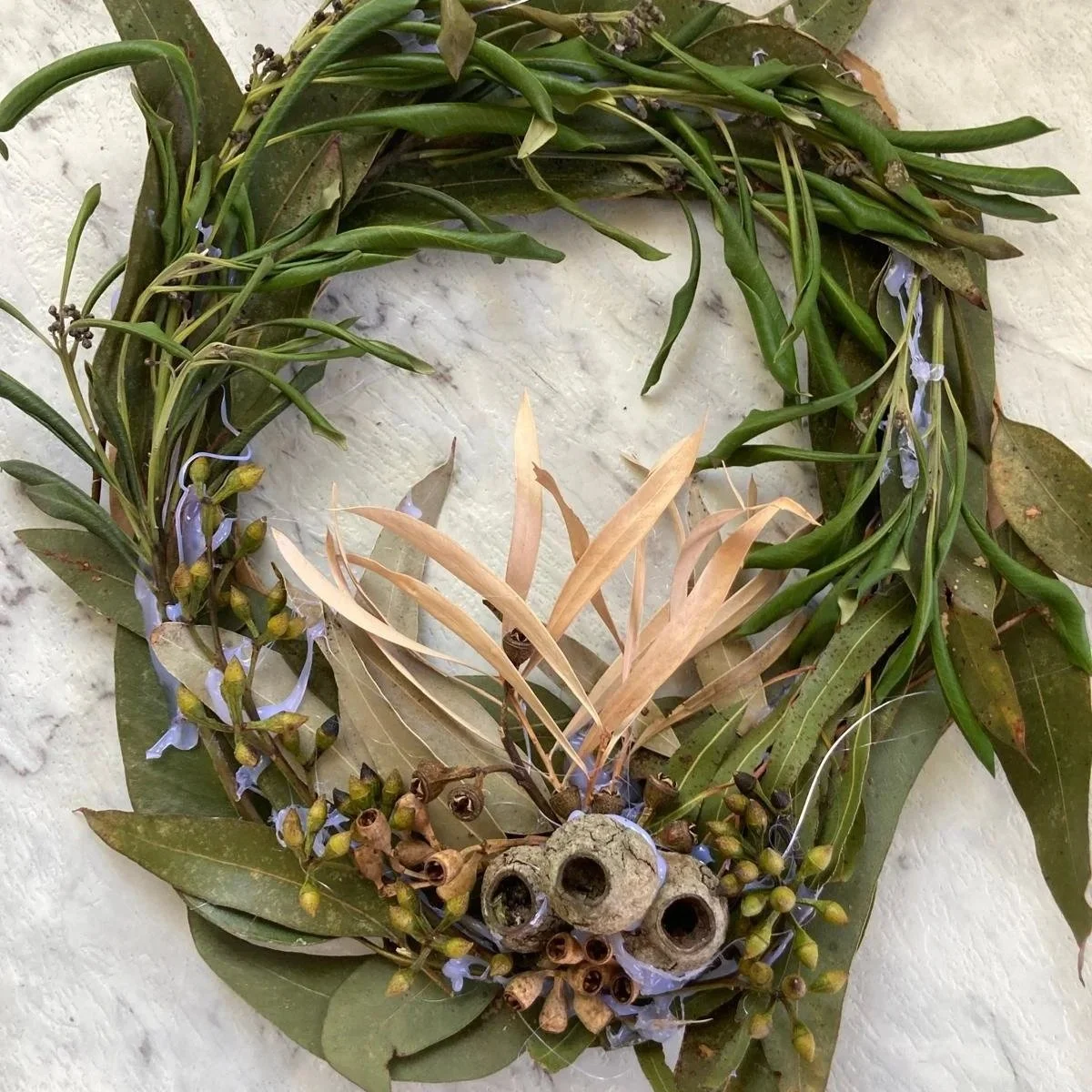
Cardboard Wreath
If you can’t find a wire hoop, you can cut a donut shape out of cardboard and hot glue your foilage. You will need a lot of glue to hot the larger items on and as you can see here, I went a little overboard and you can see the glue. I might paint the exposed glue gold to integrate them into the piece.
How to Make a Native Hanging Bouquet
If a full wreath feels like too much commitment, try a hanging bouquet instead. It's simpler, faster, and just as beautiful.
What You'll Need:
Native foliage and branches (a good mix of textures)
Twine, wool, or raffia
Scissors
Optional: seed pods, dried flowers, or grasses
The Process:
Step 1: Gather Your Bundle Collect 5-8 stems of varying lengths and textures. Think about how they'll look hanging - longer pieces at the back, shorter or more interesting shapes toward the front.
Step 2: Arrange and Hold Hold your bundle in one hand, arranging stems until you're happy with how they sit together. Don't overthink it - native plants are forgiving and look beautiful in their natural, slightly wild state.
Step 3: Secure with Twine Wrap your twine, wool, or raffia around the stems twice where you're holding them (usually about a third of the way down from the top). Pull tight and tie a secure knot. You can wrap it a few more times for a decorative finish if you like.
Step 4: Create a Hanger Leave a long tail of twine to create a loop for hanging, or tie a separate piece around the binding for your hanger.
Step 5: Hang and Enjoy These bouquets look beautiful hung on doors, walls, or even from ceiling beams. Like the wreath, they'll dry naturally and last for months.
Why Choose Native Plants?
Beyond their beauty, Australian natives are:
Sustainable - they're built for our climate and don't need special treatment
Long-lasting - they dry naturally without losing their structure
Uniquely ours - they tell a story about where we live
Low-maintenance - no watering, no fuss
Whether you make a full wreath or a simple hanging bouquet, you're creating something that celebrates an Australian summer festive season. These aren't just decorations - they're a connection to place, season, and the incredible resilience of our native landscape.
Ready to get started? Watch the video tutorial above and gather some beautiful natives. Your Australian festive wreath is waiting.